Mars Jump



































Mars Jump – A Jumping Game That Gets Easier to Make Mistakes the More You Play
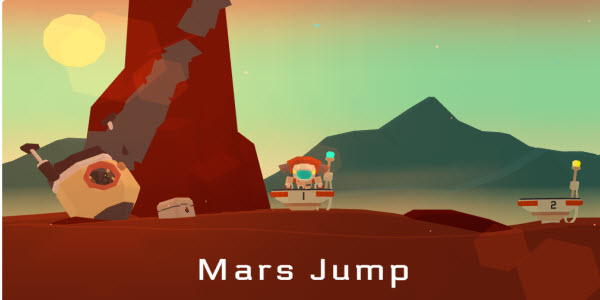
Mars Jump is so simple that you can understand it in seconds. The screen isn't overly detailed, and there are no lengthy instructions. You control a small character, jumping from one platform to another in a Martian setting. It sounds easy, but playing it reveals it's not as straightforward as it seems.
What genre is Mars Jump?
The game belongs to the arcade/platform jump genre. The goal isn't to complete the level, but to go as far as possible. Each fall is the end; there's no chance to correct mistakes. This requires players to concentrate from the start.
Simple but Difficult Gameplay
The gameplay of Mars Jump isn't complicated. Just time your jumps. But the problem is, each jump must be precise. Jumping too early means missing, jumping too late means falling. As the speed increases, a single misstep can have serious consequences.
The game doesn't offer many helpful tools. Almost every outcome depends on the player's skill, not luck.
Pace and Controls
Mars Jump accelerates quite quickly. It might feel easy at first, but after just a few minutes, it becomes intense. The distance between the levels changes constantly, with no clear pattern to remember.
The controls are responsive. After each failure, players usually know where they went wrong, which is why many people immediately try again.
Graphics and Game Environment
The game uses a minimalist style with muted colors, perfectly capturing the atmosphere. There are no unnecessary effects. Everything is clear enough for players to focus on jumping.
This design prevents Mars Jump from becoming confusing, even during extended play sessions.
Difficulty and Replayability
Mars Jump doesn't have traditional easy or difficult levels. The difficulty increases progressively with gameplay. The further you go, the greater the pressure. One mistake means starting over.
This creates a familiar loop: play – fail – play again. Not frustrating, just a desire to do better than the last time.
Overall Review
Mars Jump isn't a game to show off graphics or content. It's the kind of game for those who like to challenge their reflexes and concentration. Simple, fast, but not easy at all.